The U.S. cremation rate hit 63.4% in 2025, up from under 40% a decade and a half ago. The Cremation Association of North America projects that number will reach 82.3% by 2045, with more than two out of three bodies cremated in an average year through the rest of this decade. Burial sits at 31.6% nationally, and stays meaningfully higher across the South, the Midwest, and Catholic markets.
That 82.3% is a projection, but one based on where things already stand. The monument dealer memorial market shift is structural, driven by mobility and changing cultural attitudes, not a passing trend that reverses with the next generation. What matters for a dealer is what this means locally. The national number is not your market’s number. A shop in a heavily Catholic county in Ohio or a rural Kentucky county is looking at a very different mix than a shop outside Phoenix. Understanding the national trend and then translating that into what it means for your specific inventory, supplier relationships, and shop’s future, is the first step toward using it rather than reacting to it.
Cremation Families Are Still Buying Memorials. The Product Mix Has Changed
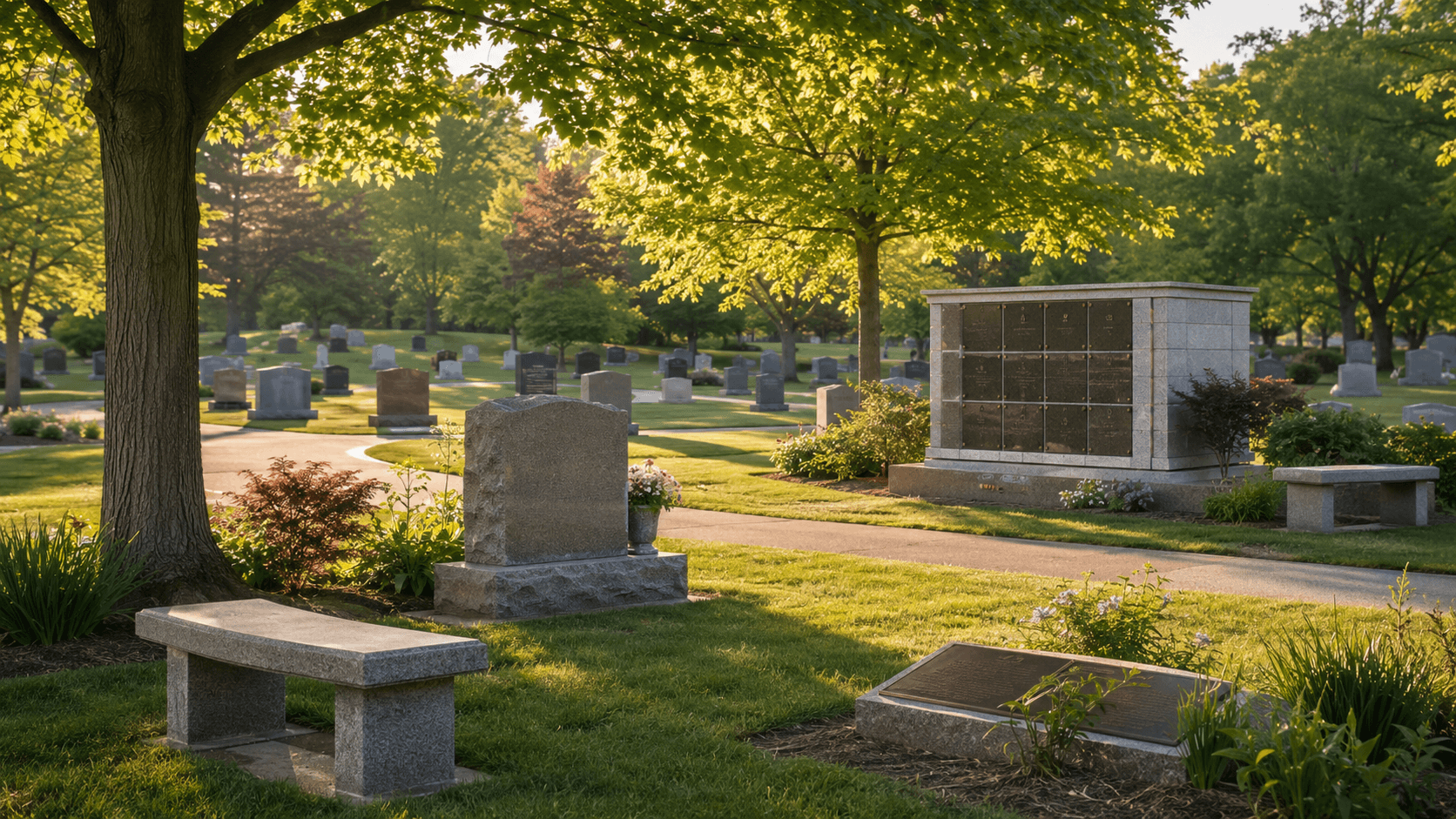
The shift looks different up close: cremation families are not skipping memorialization. They are buying different products. Cremation benches, including companion versions built for two urns, flush granite markers, pedestals, and pillar-style memorials are the fastest-growing categories in the business right now. One industry source reports cremation bench inquiries tripling over two years. Dealers who built out cremation inventory saw those products reach 40% of total sales within eighteen months.
Average transaction values have held up through this shift, because families choosing a bench or a pedestal are still investing meaningfully in marking a life. The underlying need to memorialize has not changed. What has changed is which product answers that need.
There is also a real education gap, and it cuts in the dealer’s favor. SCI’s CEO told investors in a Q3 2025 earnings call that almost none of the cremation consumers his company surveyed knew what memorialization options existed for cremated remains, but roughly eight out of ten said they were interested once they saw the options. That gap between awareness and interest is where a knowledgeable dealer earns the sale.
Granite Pricing Is Genuinely Unpredictable Right Now. Here Is Why
India, Brazil, and China together accounted for 75.1% of processed granite import volume into the U.S. in the first half of 2025, so tariff policy on those three countries drives far more than most dealers outside the sourcing side realize. Tariffs on Indian stone rose from 25% to 50% in August 2025. Brazilian granite was hit as well. Tariffs on Chinese material swung between roughly 21% and over 100% across 2023 through 2025, with pauses and reversals along the way. One Cleveland monument company documented custom duty fluctuations on Chinese materials ranging from 21% to 59% over that span, a real illustration of what “unpredictable” means in practice.
Some dealers are absorbing these swings rather than passing the cost to a grieving family, which is admirable and also unsustainable as a permanent strategy. Others have delayed printing annual price lists because pricing could change again before the ink is dry. Whichever way an individual shop is handling it, the mechanics are the same: when the bulk of the country’s raw granite comes through three countries and all three have been subject to shifting tariff policy, price stability depends heavily on who is doing your sourcing and how well they understand total landed cost, not just the headline number on a slab.
What The Dealer Advantage Actually Looks Like In This Market
A few things separate dealers who are well positioned for where the market is heading from those who are not. Inventory mix that matches what families are asking for now, rather than what sold five years ago, is the first. A clear understanding of total landed cost in a tariff environment, instead of reacting to whatever number shows up on an invoice, is the second. Supplier reliability, meaning a partner who can tell you what is actually happening with pricing and lead times rather than surprising you, is the third.
The fourth is the one no online retailer or corporate operator can fully replicate: local presence. Design capability, personalization, and the kind of community relationships that come from being the shop a family has trusted for two generations. Online direct-to-consumer retailers compete hardest at the commodity end of the market, standard gray granite with simple inscriptions sold to price-sensitive buyers. They are far less of a threat to a dealer who can sit with a family, understand what they need and want, and deliver something personal. That is not a defensive posture. It is the one advantage no online retailer can buy, and it holds regardless of which supplier a shop buys from.
The Long View: What The Memorial Market Looks Like In Five Years
Burial is not disappearing. In the South, the Midwest, and heavily Catholic markets, burial rates will stay above the national average for years, and the demand for traditional upright monuments in those regions will hold strong. The global tombstone market is valued at $13.47 billion in 2025 and projected to grow past $20 billion by 2035. The product mix is changing. The business itself is not.
Two channel shifts are worth watching without treating them as adversaries. Funeral homes, including large chains, increasingly offer memorialization directly as part of packaged at-need services, because they have first contact with the family and the purchase can happen within days rather than months. Some corporate cemeteries lean on preferred-vendor arrangements for the same reason. Neither of these is new behavior so much as an extension of dynamics that have always existed in this business, and neither one is the enemy. They are other participants navigating the same structural shift.
What holds steady through all of it is what a dealer offers that no other channel replicates: sitting with a family, understanding what they actually need, and guiding them to something that will still have meaning in fifty years. The dealers who invest now in cremation product knowledge, in understanding their real landed cost, and in the relationships that built their business in the first place are the ones positioned to hold their ground, and to pick up the customers left behind as the industry consolidates around them. The fundamentals of why this business exists have not changed.
If you have questions about what these numbers mean for your business, we’re here to help.
Sources: Cremation Association of North America (CANA); Stone Depot US, April 2026; SCI Q3 2025 earnings call via Funeral Director Daily, December 16, 2025; CNBC, November 30, 2025; StoneNews.eu, August 2025; Stone World, October 2025; Global Growth Insights, February 2026. Full sourcing detail in the companion content brief.
Share: